
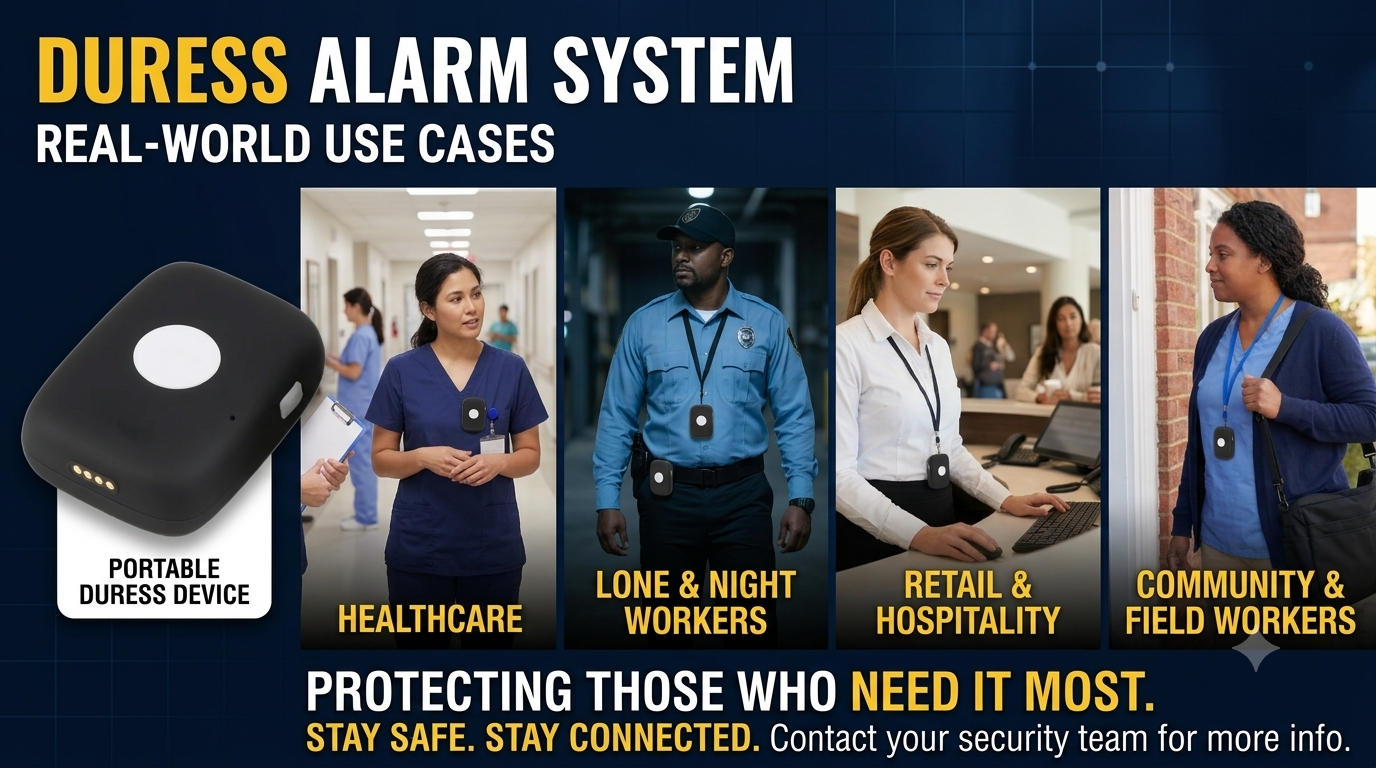
You know that feeling when you've got someone out on their own, a nurse doing home visits, a security guard on the graveyard shift, a technician stuck out at some remote site, and a little voice in the back of your head goes "what if something happens and nobody knows"? That's basically the whole reason a proper duress alarm system Australia businesses can trust exists. It's not about ticking a box for your WHS folder. It's about actually closing that gap. So let's get into what matters when you're picking one, where people usually stuff it up, and how to make sure it's not just sitting there as an expensive gadget nobody uses properly.
Figure Out What You're Actually Worried About
Before you look at a single product, sit down for five minutes and ask yourself what you're really trying to prevent here. A violent run-in with an aggressive client? Someone collapsing and nobody noticing for hours? A worker going off-grid on a job site where there's no signal to speak of?
Because honestly, these aren't the same problem, and they don't need the same fix. A retail store dealing with the odd aggressive customer has completely different needs to a mining operation with people scattered across paddocks with patchy coverage. Get honest about your actual risk first. Everything else gets a lot easier after that.
Don't Get Sucked In By Feature Lists
It's so easy to end up comparing spec sheets like you're buying a phone. This one's got a longer battery. That one's got a nicer looking wristband. Another one's got an app with fifteen different settings. None of it means anything if the alert doesn't reach someone who can actually do something about it, fast.
So ask the blunt question: what happens in the four seconds after someone hits that button? If a sales rep can't answer that without dancing around it, take that as your answer.
- Who gets the alert first? A call centre? A manager's phone? Emergency services directly?
- Is the monitoring actually certified, or is it just pinging a notification to whoever happens to have their phone on them?
- And if that person's busy or asleep or just doesn't see it in time, what then?
Coverage Is The Thing Everyone Forgets
Here's the bit that trips a lot of businesses up. Not everyone's working from an office in the middle of the city with five bars of reception. Plenty of Aussie workplaces are out on farms, in warehouses with walls thick enough to block a signal, down in basements, or hours away from the nearest town. If your fancy duress system only works when there's a decent mobile connection, it's basically useless for the exact people who need it most.
Look for something that can fall back onto a different network on its own, or that works with satellite for the genuinely remote stuff. And honestly, don't just believe the brochure on this one. Test it in the actual spots your team works in.
Discreet Activation Actually Matters, A Lot
This one gets overlooked constantly and it shouldn't. Sometimes making it obvious you're calling for help is the worst possible thing you could do in that moment. If someone's dealing with an angry or unpredictable person, fumbling around for a phone or yelling into a device is only going to make things worse.
That's why the better systems out there rely on something quieter, a discreet button press, a shake of the phone, a wearable trigger tucked into a wristband or clipped to a belt. Help gets called and the person standing right there doesn't even clock what just happened.
Ask Where All That Data Actually Goes
An alarm that just makes a noise and vanishes into thin air isn't giving you much long term value. What separates the decent systems from the genuinely useful ones is what happens to the information after the alert's been raised.
Every single trigger should get logged, timestamp, location, what happened, so you've got something to point to later for WHS purposes, insurance claims, or just working out where your actual weak spots are. Over time you start noticing patterns too, maybe it's always the same site, or the same shift, and suddenly you're looking at prevention instead of just cleaning up after the fact.
Stop Treating It Like A Standalone Gadget
Honestly, this is probably the biggest mistake I see. Businesses buy the duress alarm, plug it in, and it just sits there completely separate from everything else they use to run their team. Nobody's checking the reports. Nobody's cross-referencing it with who was actually rostered on that day.
A much smarter move is having those alerts flow straight into your workforce management systems, the same platform handling your scheduling, your check-ins, your reporting. That way, when an alert comes through, whoever's watching it already knows exactly who that worker is, where they should be, and what their shift's supposed to look like. Suddenly it's not some isolated safety toy, it's actually part of how your business runs.
Questions Worth Asking Before You Sign Anything
Before you commit to anyone, push past the pitch a bit and ask some direct questions:
- What's your real average response time, not the number in the brochure?
- Is the monitoring team actually certified, and where are they based?
- Will this hold up in the specific spots my crew actually works in?
- Does it talk to the scheduling and reporting tools we're already using?
- If we ever need it for an insurance claim, what does that audit trail look like?
If they can't give you a straight answer on any of that, take the hint.
Conclusion
At the end of the day, picking the right duress alarm system Australia businesses actually rely on comes down to a handful of things that really matter: a response that's fast and properly certified, coverage that works where your people genuinely are, a way to call for help without drawing attention, and a system that doesn't just sit off in its own little corner. Once your duress alerts are properly plugged into your workforce management systems, you're not just scrambling when something goes wrong, you're building a clearer picture of your risks over time. Test it properly before you roll it out to your whole team. The moment it actually matters is not the moment you want to find out it doesn't work.