
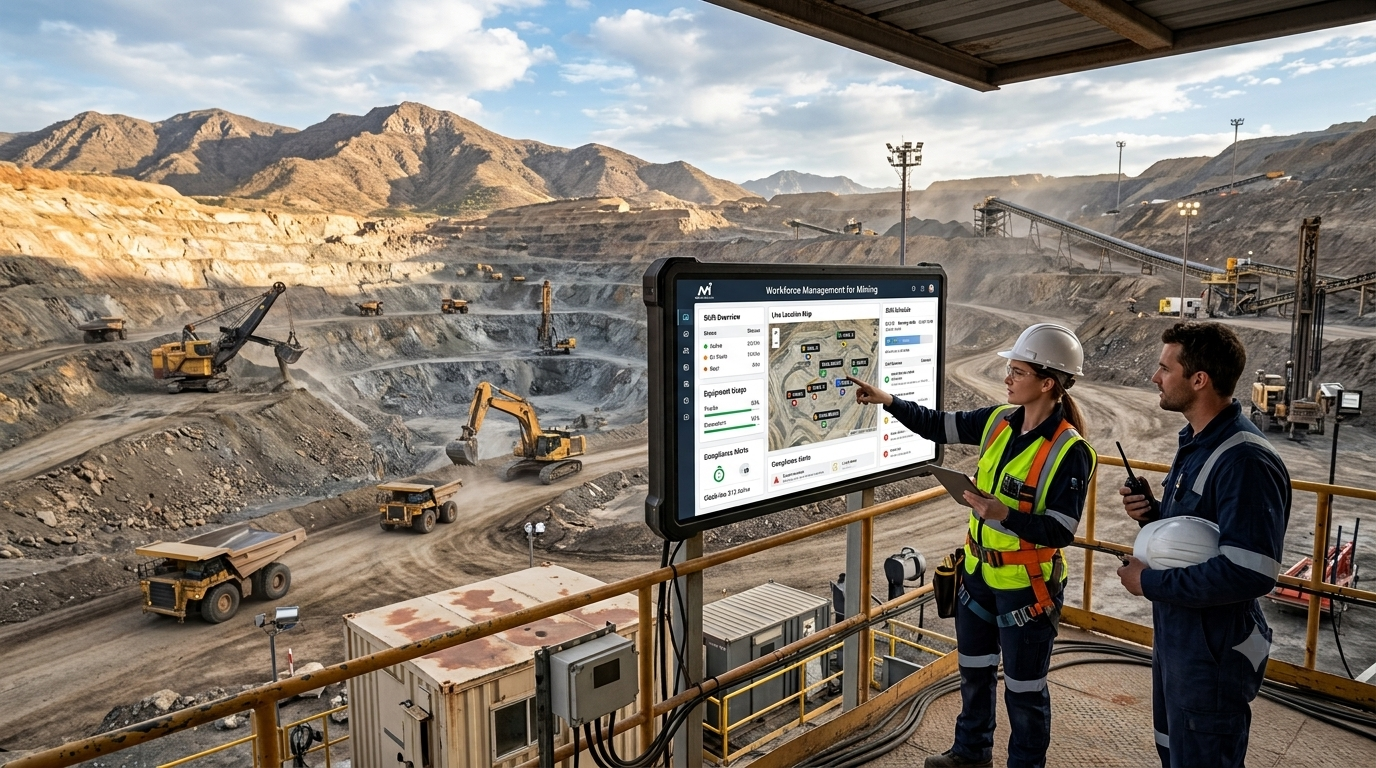
Workforce Management Software for Mining: How It Actually Helps
Mining doesn't leave much room for error. Sites are remote. Shifts rotate constantly. Workers spread out across pits, tunnels, and processing areas, often out of sight from each other. That's the world workforce management software for mining has to work in. It's why more operators are ditching spreadsheets and whiteboards. In this guide, we'll cover what this software actually does, why generic tools fall short, and what to look for in a platform.
What This Kind of Software Actually Does On Site
Strip it back and it's scheduling, attendance, and communication in one place. But mining sites need more than that. Shifts rotate constantly. Crews split across multiple pits. Some work underground, where signal drops out completely. Miss one handover, and you've got a real gap, not just an inconvenience.
Good software tracks who's on site. It shows roughly where they are. It flags whether they've checked in on time. No more chasing that down on a clipboard. For fly-in-fly-out operations, this is often the only real way to know who's underground, who's topside, and who hasn't checked in.
Why Generic Scheduling Tools Fall Apart on Mining Sites
A lot of companies start with something built for retail or hospitality. It usually doesn't hold up. Mining runs on its own rhythm. Long shifts. Rotating rosters. Fatigue rules. Safety obligations a generic app was never built around.
Platforms made for this industry handle duress alerts for lone workers. They support automatic check-ins for isolated tasks. They connect to existing safety paperwork. That last part matters more than people think. Paper records fall behind fast. A gap in documentation can turn into a real problem, especially during an audit or after something's already gone wrong.
The Safety Side: When Workers Are Out There Alone
Mining involves a lot of solo work. Night patrols. Site inspections. Maintenance checks in spots away from the main crew. This is where a lone worker safety app stops being a nice extra. It becomes part of the actual safety plan.
Say someone triggers a duress alert, or misses a check-in. That alert needs to reach someone fast. Not a text sitting unread on a supervisor's phone. A monitored line that actually responds. That gap, between the alert going out and help arriving, is where this technology proves itself.
Where Job Safety Assessment Fits Into Workforce Management Software for Mining
Every task on a mining site needs a job safety assessment before work starts. This is one area where software changes things the most. Paper forms get outdated fast. Digital job safety assessment workflows let a supervisor log risks and sign off on controls in minutes. Records stay searchable, so nobody's digging through a filing cabinet later.
This matters for two reasons. First, it stays current. Updating a digital form takes minutes, not a reprint. Second, it leaves a clear trail. If a regulator needs to check whether procedures were followed, the job safety assessment ties straight to the shift record. For a look at what's expected on the compliance side, Safe Work Australia's mining resources outline the safety obligations operators work against.
Rostering Gets Complicated Fast, and Fatigue Rules Make It Worse
Mining rosters are a headache to manage by hand. Rotating shifts. Fly-in-fly-out schedules. Fatigue limits on how long someone can work before a break. Doing this manually across a big crew isn't just tedious. Mistakes here can turn into real safety risks, not just scheduling annoyances.
Software built for the industry handles that logic automatically. It flags when someone's close to a fatigue threshold. It catches when a shift swap would break a compliance rule. What used to eat hours out of a supervisor's week now runs itself.
What Actually Matters When You're Choosing a Platform
Not every workforce platform was built with mining in mind. Push past the sales pitch. Ask a few direct questions. Does it handle duress alerts and lone worker check-ins natively? Can job safety assessments live inside the daily workflow? Does it manage complex rosters without constant manual fixes? Where does the data actually sit, especially for sites under government contracts?
Conclusion
Picking the right workforce management software for mining comes down to one thing: does it understand the job. Remote crews. Shifting rosters. Safety obligations that can't slip. Real-time visibility, proper lone worker protection, and a job safety assessment process built into the daily routine turn a mess of manual work into something supervisors and workers can actually rely on. For operations still running on spreadsheets and paper forms, this is usually where the switch starts paying for itself.